Clyde E. Lassen
| Era | Vietnam War |
|---|---|
| Branch | U.S. Navy |
| Rank | Commander |
| Military Decorations | Medal of Honor |
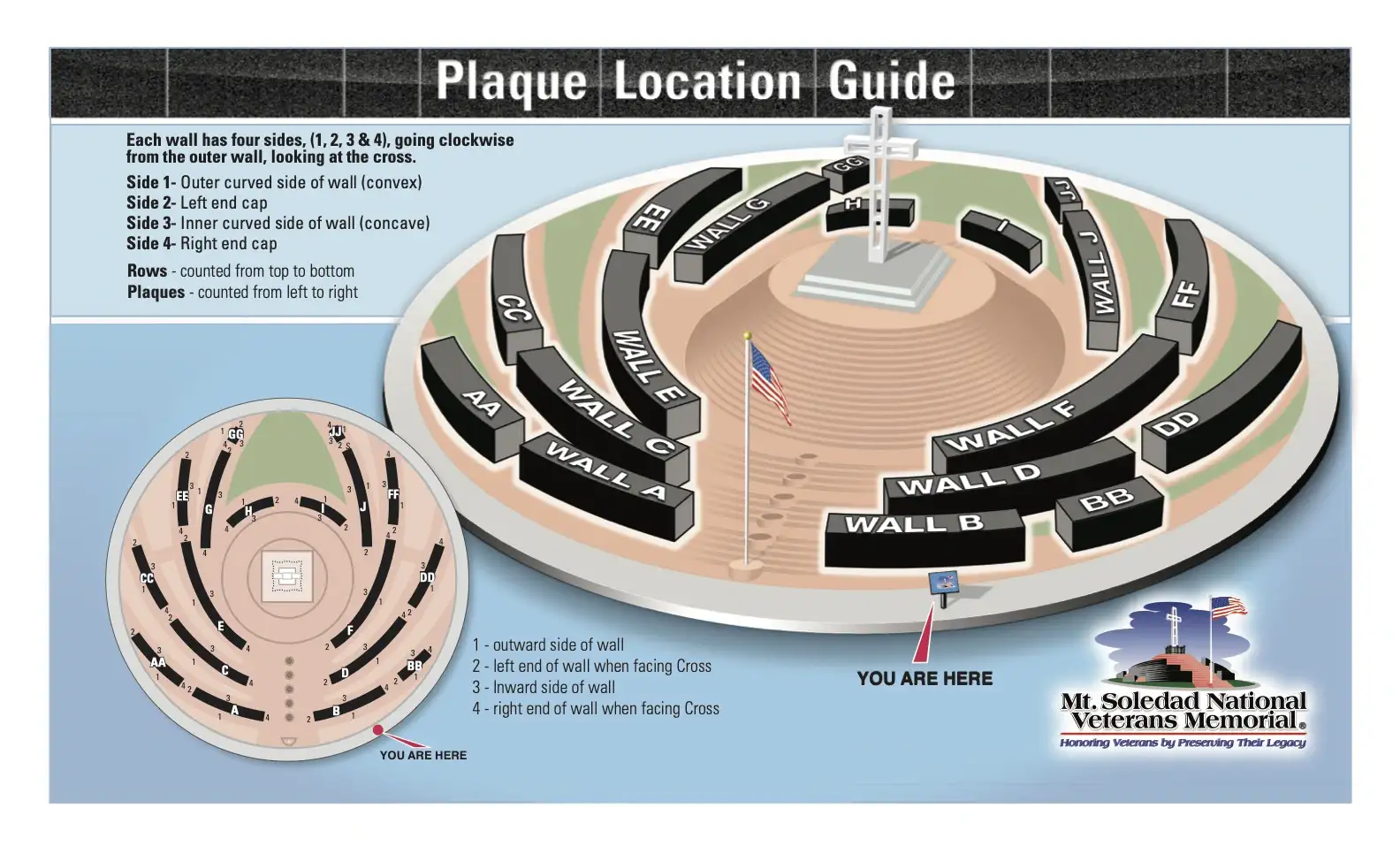
| Wall | CC |
| Wall Side | 1 |
| Row | 2 |
| Plaque Number | 23 |
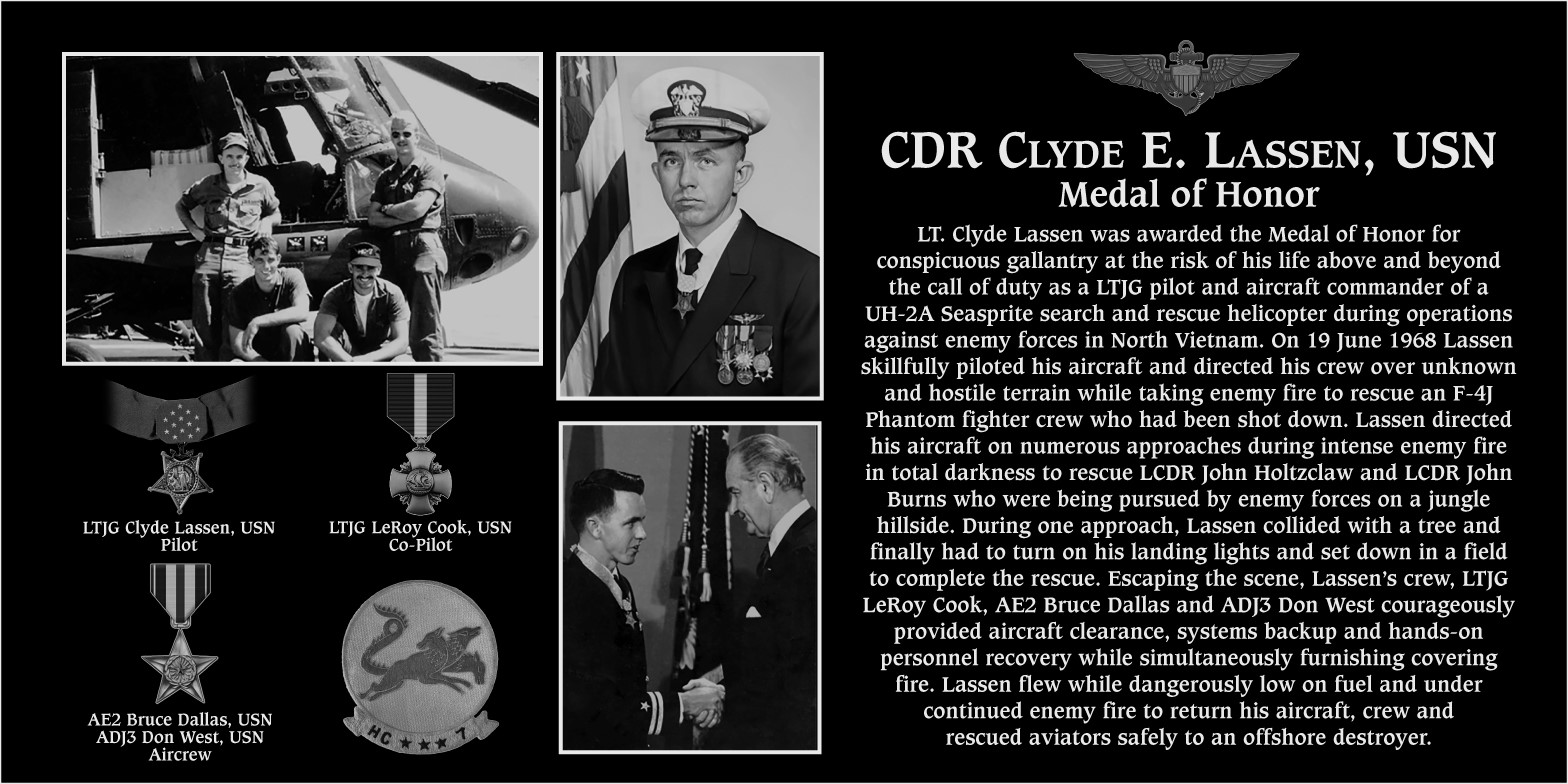
LT. Clyde Lassen was awarded the Medal of Honor for conspicuous gallantry at the risk of his life and above the call of duty as a LTJG pilot and aircraft commander of a UH-2A Seasprite search and rescue helicopter during operations against enemy forces in North Vietnam. On 19 June 1968 Lassen skillfully piloted his aircraft and directed his crew over unknown and hostale terrain while taking enemy fire to rescue an F-4J Phantom fighter crew who had been shot down. Lassen directed his aircraft on numerous approaches during intense enemy fire in total darkness to rescue LCDR John Holtzclaw and LCDR John Burns who were being persued by enemy forces on a jungle hillside. During one approach, Lassen collided with a tree and finally had to turn on his landing lights and set down in a field to complete the rescue. Escaping the scene, Lassen's crew, LTJG LeRoy Cook, AE2 Bruce Dallas and ADJ3 Don West courageously provided aircraft clearance, systems backup and hands-on personnel recovery while simultaneously furning covering fire. Lassen flew while dangerously low on fuel and under continued enemy fire to return his aircraft, crew, and rescued aviators safely to an offshore destroyer.
For conspicuous gallantry and intrepidity at the risk of his life above and beyond the call of duty as pilot and aircraft commander of a search-and-rescue helicopter, attached to Helicopter Support Squadron 7, during operations against enemy forces in North Vietnam. Launched shortly after midnight to attempt the rescue of two downed aviators, Lieutenant Lassen skillfully piloted his aircraft over unknown and hostile terrain to a steep, tree-covered hill on which the survivors had been located. Although enemy fire was being directed at the helicopter, he initially landed in a clear area near the base of the hill, but, due to the dense undergrowth, the survivors could not reach the helicopter. With the aid of flare illumination, Lieutenant Lassen successfully accomplished a hover between two trees at the survivors' position. Illumination was abruptly lost as the last of the flares were expended, and the helicopter collided with a tree, commencing a sharp descent. Expertly righting his aircraft and maneuvering clear, Lieutenant Lassen remained in the area, determined to make another rescue attempt, and encouraged the downed aviators while awaiting resumption of flare illumination. After another, unsuccessful, illuminated rescue attempt, and with his fuel dangerously low, and his aircraft significantly damaged, he launched again and commenced another approach in the face of the continued enemy opposition. When flare illumination was again lost, Lieutenant Lassen, fully aware of the dangers in clearly revealing his position to the enemy, turned on his landing lights and completed the landing. On this attempt, the survivors were able to make their way to the helicopter. En route to the coast he encountered and successfully evaded additional hostile anti-aircraft fire, and with fuel for only five minutes of flight remaining, landed safely aboard the U.S.S. Jouett (DLG-29). Lieutenant Lassen became the first Naval Aviator and fifth Navy man to be awarded the Medal of Honor in Southeast Asia/Vietnam.
Plaque Wall Map